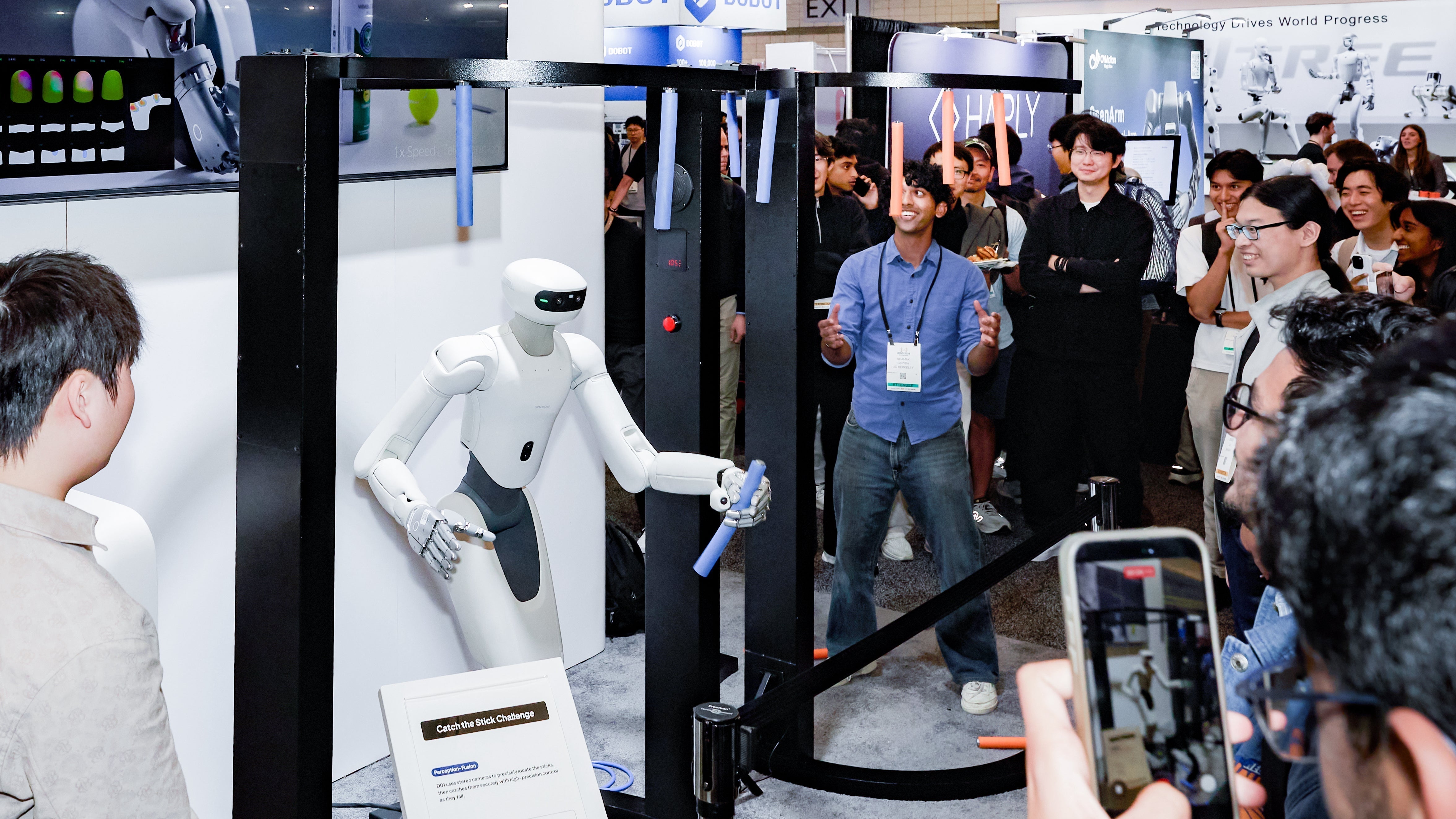
A robot can see an object without knowing whether its grip is slipping. Sharpa’s September 28 IROS launch addressed that gap with the D01 manipulation robot, W02 tactile hand and AE01 haptic data glove.
Current impact
The company specifies 100Hz tactile sampling for D01, a 0.1–20N sensing range and 0.2N force resolution. These sensing specifications describe information available to the controller; they are not task success rates. The immediate significance is a hardware stack designed to connect physical contact, manipulation and the collection of human demonstrations.
Potential greater impact
If controllers can turn those signals into timely corrections, robots could handle more variation in surfaces, object placement and contact. Broader usefulness would depend on stable calibration, control latency, durability and learning that transfers beyond the demonstrated objects.
What would establish progress
The next test is repeated manipulation with disclosed object sets, failure counts and recovery behavior. A successful catch or delicate grip illustrates a possibility, but sustained work requires dependable performance after wear, changes in lighting and imperfect initial placement. Touch matters when it changes the result, not merely when another sensor appears in the specification.
Image: Sharpa / official announcement. Used for source-attributed editorial reporting; rights remain with the owner.
Sources & evidence
Sources describe the announcements and evidence available when this analysis was published. Company claims are attributed; plans and trials are not treated as sustained operation.