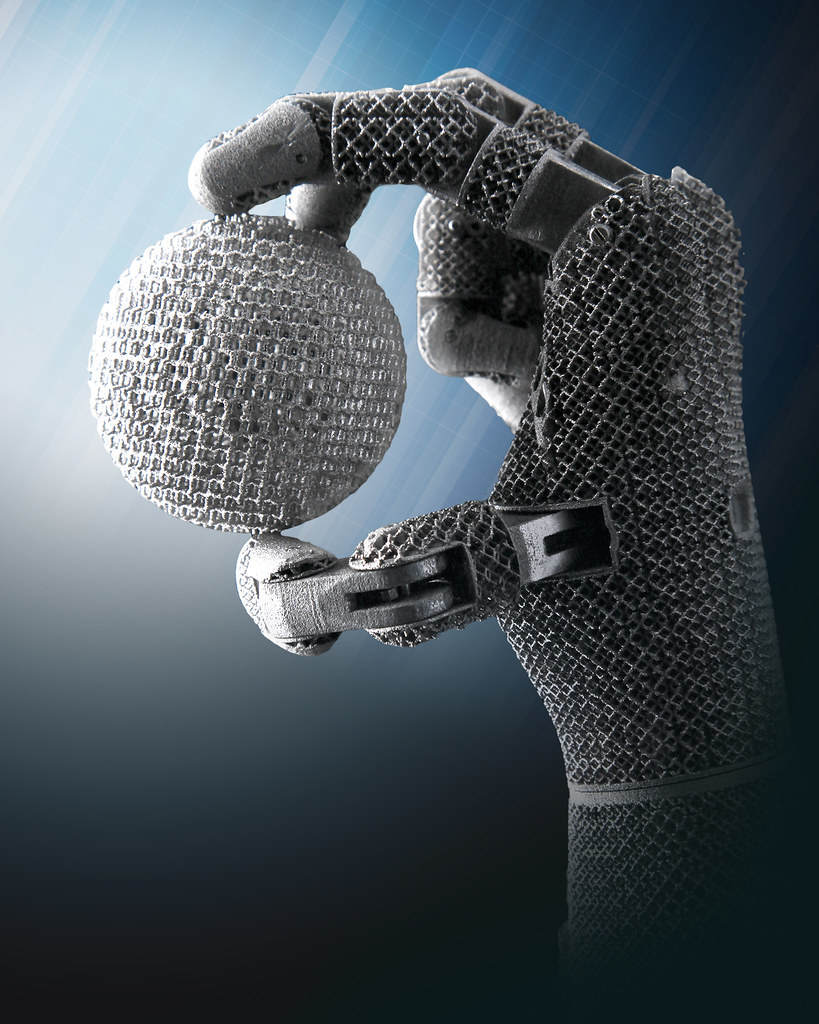
A humanoid hand can have many joints yet remain uncertain about its contact with an object. Jodell Robotics' new Mozart hand puts sensing across the fingers at the center of its proposal for more capable manipulation.
In its October 16 company release, Jodell introduced the five-finger Mozart alongside visuo-tactile sensors and a data-acquisition kit. It describes distributed sensing of contact force and position, linked to its own drive and control algorithms. The announcement identifies the components; it does not publish a repeated humanoid task evaluation. Jodell's product announcement.
A hand needs to communicate what it feels
The useful output of tactile sensing is not merely a larger stream of measurements. A humanoid controller must interpret whether contact is stable, whether an object moved inside the grip and whether a finger is pushing against an unexpected surface. Each condition may call for a different response.
Integration therefore includes timing and coordinate conventions as well as mechanical attachment. The robot needs to connect what the hand reports to where its arm is moving. Delayed or ambiguous contact information can be difficult to use even when individual sensors are sensitive.
Human-like form does not specify a task envelope
A five-finger design may offer several ways to hold the same object. That flexibility can also create more choices for the control system and more surfaces that need calibration or maintenance. The launch release does not specify success rates over unfamiliar objects, recovery behavior after slipping or how performance changes with wear.
For a humanoid developer, the immediate opportunity is to evaluate a new sensing and actuation package against a defined task. A meaningful trial should include awkward object orientations and failed contacts, not just examples selected for a clean grasp. It should also measure how often the arm or a person must compensate for a hand-level failure.
If distributed touch makes those recoveries more predictable, it could widen the set of tasks a humanoid can attempt. The next evidence is an integrated robot evaluation showing repeatable handling, intervention counts and maintenance needs. More sensing is useful when the whole body can turn it into a dependable action.
Sources & evidence
Sources describe the announcements and evidence available when this analysis was published. Company claims are attributed; plans and trials are not treated as sustained operation.