Adding a new humanoid task can mean retraining a controller even when balance and basic coordination are already learned. That makes experimentation expensive and entangles a task’s intent with the machinery that keeps the robot upright.
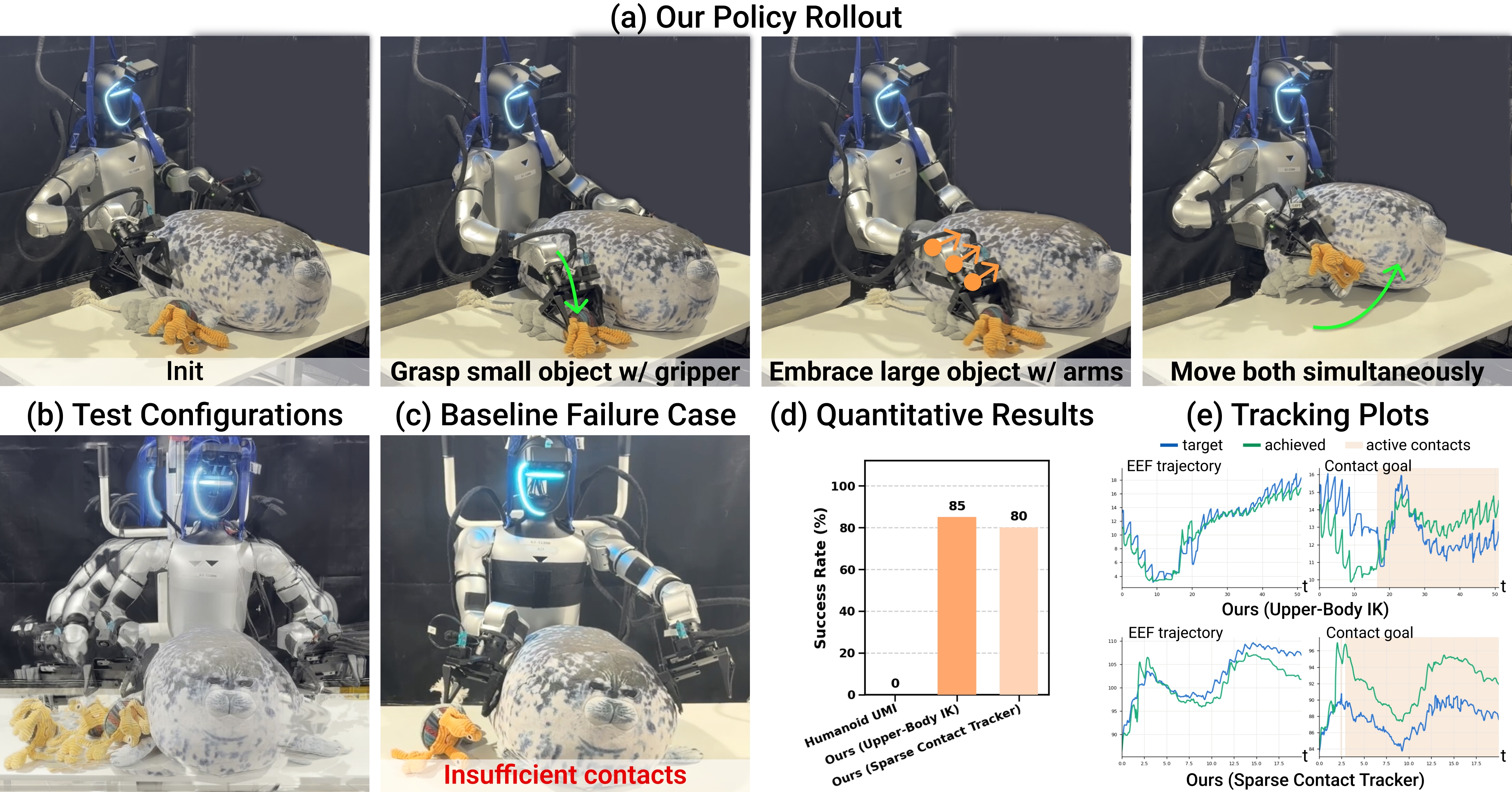
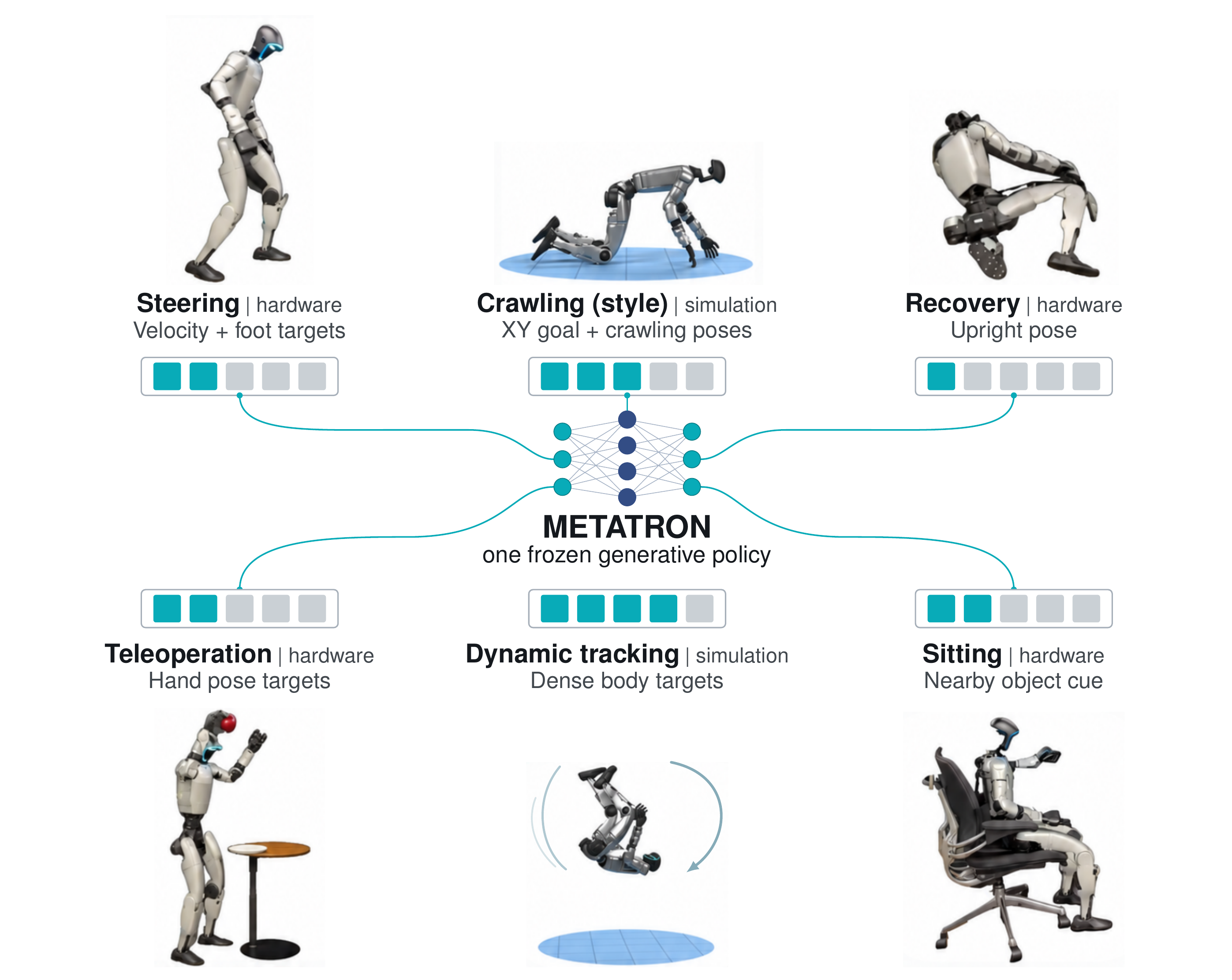
Metatron, described in an October 27 preprint, divides those responsibilities. A learned motor policy receives partial goals, including body targets and velocity commands. Small stateful programs supply those goals. The authors report one frozen checkpoint supporting walking, recovery, sitting and teleoperated pickup on a physical Unitree G1. Primary source.
A new program is not a new safety guarantee
The method makes a useful engineering boundary explicit. A program can describe where a torso or foot should go without prescribing every joint movement. Coding agents help refine some skill rules in simulation, while the underlying policy coordinates motion. Primary source.
That does not remove the need to test the resulting program. A poorly chosen target can still ask for an unsafe interaction. Nor should simulated climbing and acrobatics be read as demonstrated physical G1 capabilities: the paper separates those simulated results from hardware examples. Primary source.
Reuse should be measured at the skill boundary
The immediate value is a potentially faster way to explore tasks built from existing motor competence. It could also make failures easier to diagnose: an error may lie in the goal program, the policy’s response, or their interaction.
A deployment case would need defined task limits, repeat counts and recovery behavior for each program. The broader promise depends on how often an unchanged motor policy can accept a new skill without hidden tuning. The next evidence should quantify that transfer effort and the cases where the interface asks for behavior the controller cannot reliably deliver.
The source figure is reproduced unchanged under CC BY 4.0; attribution appears in the image caption.
Sources & evidence
Sources describe the announcements and evidence available when this analysis was published. Company claims are attributed; plans and trials are not treated as sustained operation.