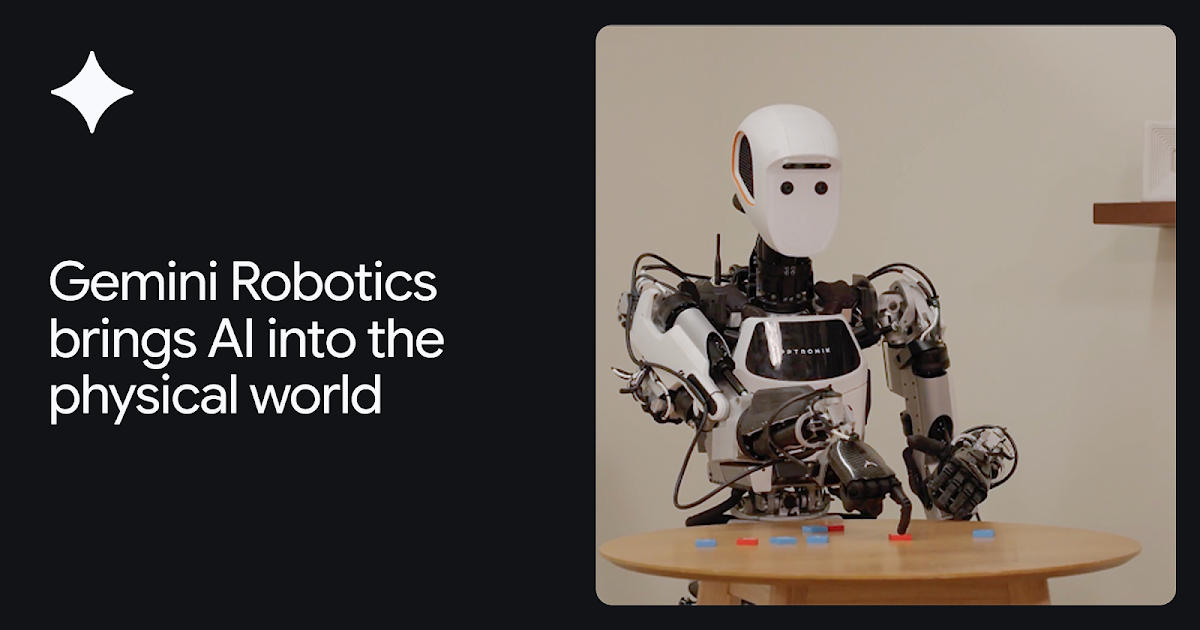
Google DeepMind introduced Gemini Robotics-ER 1.6 in April 2026 as an embodied-reasoning model, emphasizing spatial and multi-view understanding. The release is best read as progress in interpreting a physical scene and selecting useful actions, rather than proof that any attached humanoid can execute those actions reliably. The current API documentation also records the later deprecation of ER 1.6 in August 2026. A model name in an April demonstration should therefore not be presented as an unchanging current service. Gemini Robotics-ER 1.6, April 14, 2026; Gemini Robotics ER current API documentation.
The reasoning model and the controller have different jobs
A reasoning system can identify an object, infer a spatial relationship or choose a tool. A motion controller must turn that intention into forces and movements under the constraints of the actual body. The connection between them needs to be explicit. A plan that is sensible in language can still ask the robot to reach through an obstacle, exceed a joint limit or manipulate something it cannot grip. The model card is part of the evidence needed to understand the intended system and its evaluation, but it does not replace validation on the target robot. Gemini Robotics-ER 1.6 model card.
This distinction helps explain why vision-language-action research is important without treating it as a complete solution. Language can make the task interface more flexible, and broad visual experience can help a model recognize unfamiliar situations. Physical execution still requires feedback at the timescale and precision appropriate to contact. A robot should not continue an action merely because the high-level instruction remains plausible. It needs to detect whether the expected physical result occurred and, if not, return useful information to the planning layer.
Better semantics can create new failure modes
A model that interprets a vague instruction successfully in one context may interpret it differently in another. In a conversation, that can be corrected with another sentence. In a workplace, an action may already have moved a part or entered a restricted area. The interface should therefore identify which instructions can be executed directly, which require clarification and which are outside the robot's authority. These boundaries are not evidence that the model is unhelpful. They are what make a flexible model usable in a physical system with real consequences.
The same applies to tool use. A model may call a navigation or manipulation function rather than output joint commands. That can simplify development, but the function needs a defined contract: expected inputs, conditions under which it may run and a clear result. A failure should return more than a generic error if the planner is expected to choose a sensible recovery. Otherwise, the system can repeatedly request an action that the body cannot perform, consuming time while appearing to reason.
Version changes belong in the operational record
The rapid model-release cycle creates another practical requirement. A new reasoning model can change how the same instruction is interpreted even if the robot hardware is unchanged. A deployment therefore needs a record of the model, tools and constraints used during a task, together with tests appropriate to any update. DeepMind's work expands the options available to robotics developers. Its industrial significance will depend on how reliably those options are connected to sensing, control and permission, not simply on the fluency of a model's explanation of what it intends to do.
A vision-language-action model connects a description of the world and a task instruction to robot actions. That makes the idea appealing for machines expected to handle varied work. It also changes the evaluation question: understanding a request and executing it reliably in a particular physical setting are separate achievements. RT-2 research represents robot actions as tokens alongside vision and language. RT-2 research paper.
From interpretation to physical action
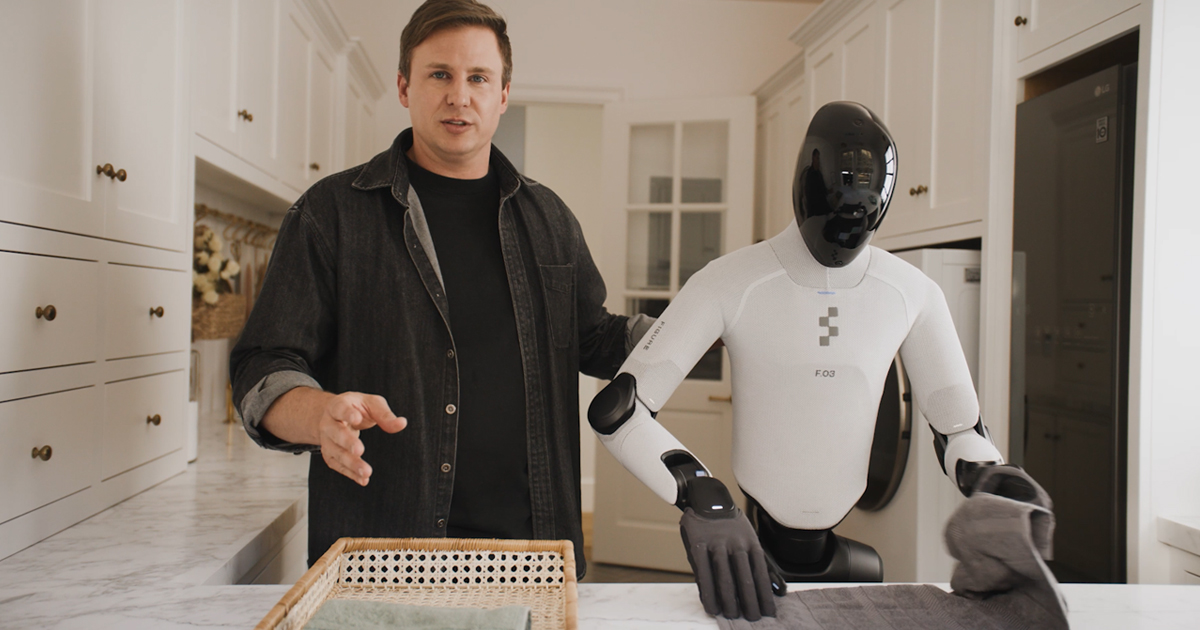
An accessible way to think about the model is as part of the path from observation to movement. It can help relate an instruction to what the robot sees, but the whole system still includes sensors, mechanical limits and operating rules. Success depends on that combination rather than on the model in isolation.
Demonstrations should therefore identify what varied and what stayed fixed. Was the object unfamiliar, the instruction rephrased or the workspace rearranged? Those are different kinds of generalization. A broad claim about adaptability is difficult to assess unless the test describes the particular change the robot handled. Google DeepMind introduced Gemini Robotics models in March 2025. Google DeepMind introduces Gemini Robotics.
Separate fluency from reliability
Physical evaluation should also examine when the system declines or asks for help. A fluent response to an ambiguous instruction is not evidence that the planned action is appropriate. The operator needs to know how uncertainty affects movement and which actions remain outside the robot's authority.
The promise is a more flexible interface between human intent and machine behavior. The burden is to verify that flexibility under realistic conditions. Buyers and researchers should report both the variety of tasks attempted and the reliability of complete execution, preserving the distinction between semantic understanding and dependable work.
Latency creates another boundary between reasoning and action. A model can produce an excellent plan too slowly to correct a slip that is already happening. The architecture needs to assign fast physical feedback to an appropriate control layer and slower interpretation to the reasoning layer. This is not a choice between intelligence and control. It is a division of responsibility that allows both to be useful, and it should be visible when a developer explains what the model itself actually contributes.
Sources & evidence
This archive preserves its original editorial date. Sources describe the events and announcements discussed; they do not establish today’s status.