NVIDIA’s Isaac Lab 3.0 release concerns the part of humanoid development that happens before a machine is trusted with a physical task: creating a policy, testing it and deciding what evidence is needed to move beyond simulation. A more integrated toolchain can shorten that work without settling whether the resulting behavior is safe or useful.
A released framework, not a deployed humanoid
In its October 21 announcement, NVIDIA says Isaac Lab 3.0 is generally available as an open-source robot-learning framework, with multi-GPU workflows and physics engines including Newton and PhysX. The same release introduces Isaac OS, a runtime connecting AI, sensors, controls and robot hardware.
Those are software capabilities. The announcement does not establish that a humanoid trained in a particular simulation will complete the same task in a customer environment.
Keep a physical acceptance test outside the training loop
Our assessment is that a developer should define the real task before comparing training runs. Success in a simulated scene is useful evidence about that scene. The physical acceptance test should separately specify the objects, starting conditions, permitted contact, failure handling and human intervention.
A versioned record of the model, simulator settings and controller helps make that comparison interpretable. Otherwise, an apparent improvement can come from a changed test rather than a more capable policy. More training capacity makes a weakly defined test easier to repeat; it does not strengthen the test itself.
Watch transfer and recovery, not only learning speed
The immediate opportunity is a released toolchain that teams can evaluate against their existing workflow. Its wider value depends on whether it helps produce repeatable physical behavior and clear failure boundaries. The next useful evidence is a documented simulation-to-hardware comparison, including unsuccessful transfers and recovery behavior, rather than a demonstration selected only for success.
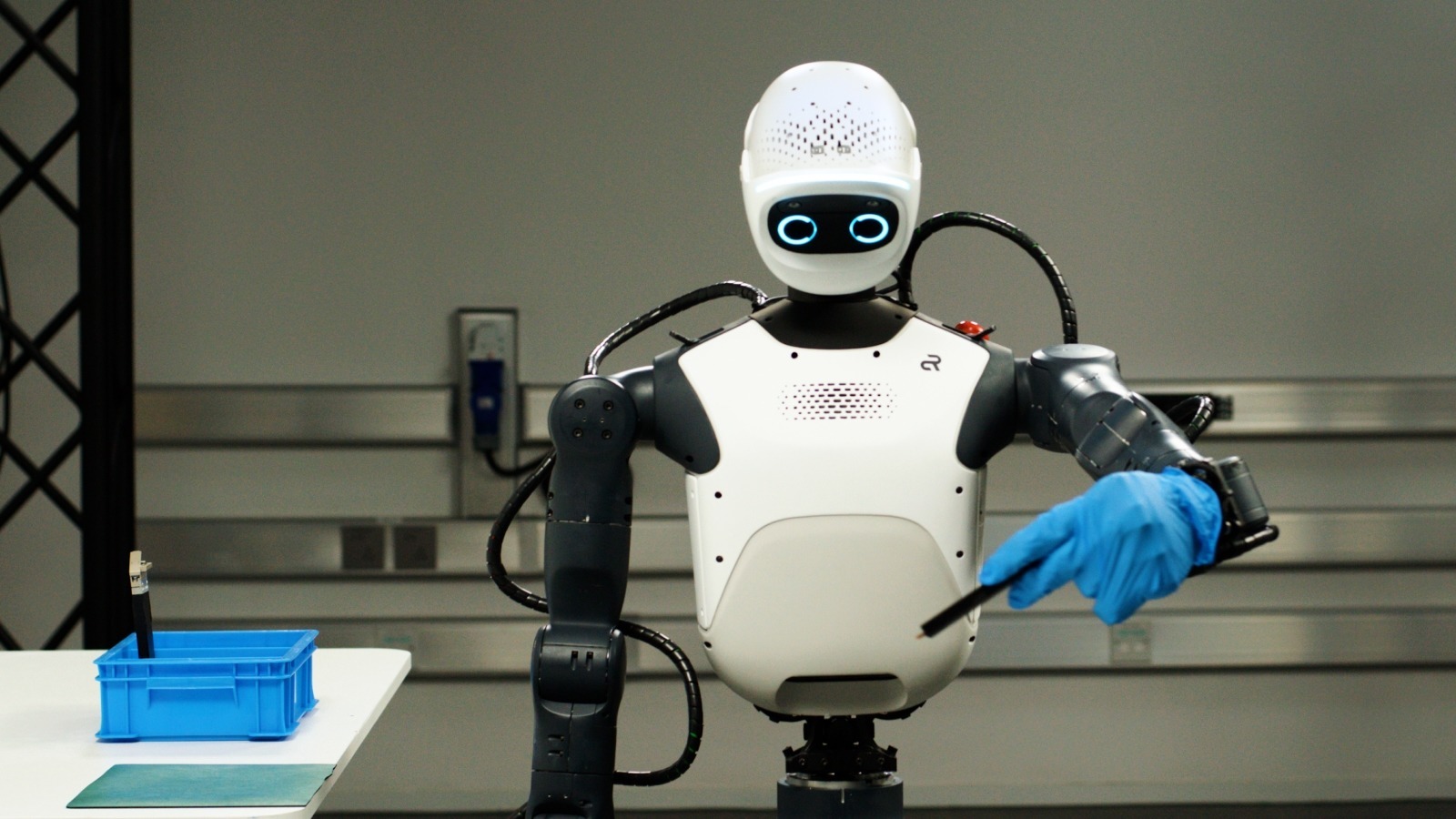
Image: NASA / public domain. NASA media-use information. Historical Robonaut 2 photograph, August 28, 2013; not an NVIDIA demonstration.
Sources & evidence
Sources describe the announcements and evidence available when this analysis was published. Company claims are attributed; plans and trials are not treated as sustained operation.