Removing a person from a hazardous location does not require removing that person’s judgment from the task. It requires a machine that can transmit useful perception and turn deliberate instructions into dependable physical action.
That is the distinction in Minerva Humanoids’ October 6 announcement. The company describes Roger as semi-autonomous: its software handles balance, fall recovery and navigation, while a trained specialist uses a VR interface to direct manipulation and retain control of critical actions. Minerva announced approximately $10 million in pre-seed funding and plans for paid pilots. Minerva announcement.
The shared-control boundary is the product
The important engineering question is what happens between an operator’s intention and the robot’s movement. Communications delay, incomplete camera views and uncertain contact can make a seemingly simple remote action difficult. Local control must stabilize the body without interpreting a high-level request as permission for an unsafe maneuver.
Minerva’s release does not establish sustained operating results, quantified communications limits or task-level intervention rates. Planned pilots and reported testing should not be presented as a proven hazardous-work service. The company also describes future production plans; those are separate from delivered robot volume. Primary source.
Distance is useful only if the work remains controllable
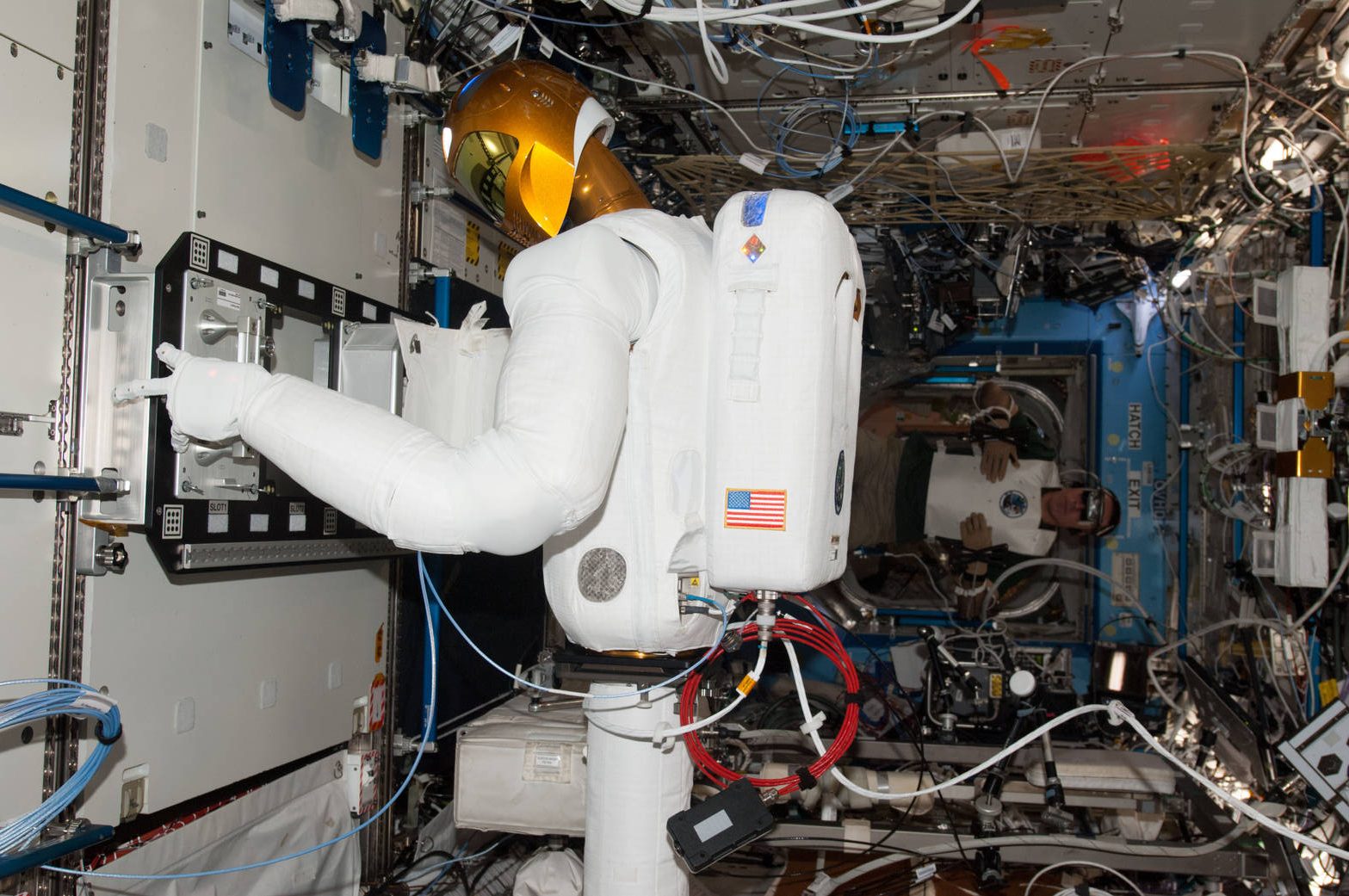
Remote humanoid control has a longer research history, illustrated by NASA’s 2013 Robonaut teleoperation experiments in the accompanying photograph. That historical context is not evidence about Roger’s performance. NASA image and experiment description.
For prospective users, the next useful evidence is a named task with clear operator responsibilities, measured completion and recovery behavior under degraded conditions. If those tests demonstrate reliable work while reducing human exposure, shared control could be valuable before broad autonomy is available. The pilot results must establish that link.
Sources & evidence
Sources describe the announcements and evidence available when this analysis was published. Company claims are attributed; plans and trials are not treated as sustained operation.