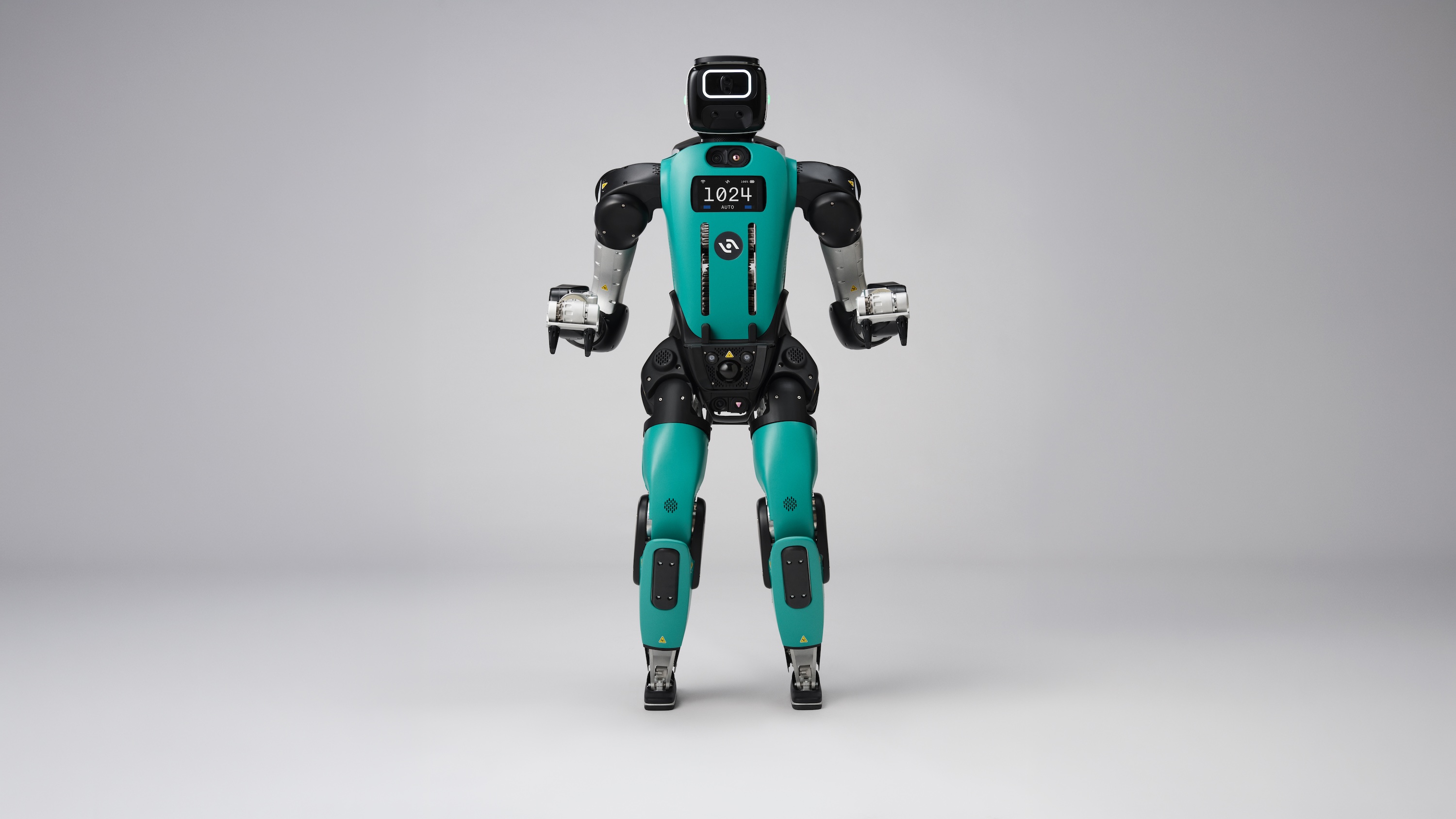
Agility's September 2026 Digit 5 announcement makes safety behavior a central feature, describing human detection and an independent controller that can trigger avoidance, stopping or a seated position. Early access is expected in 2027. The release therefore identifies the intended architecture of a forthcoming product, not a blanket assurance that every future deployment is safe. The important development is the explicit treatment of a humanoid's response to people as a system-level design problem. Digit 5 announcement, September 15, 2026.
A biped cannot treat stopping as a single switch
A mobile robot may be carrying a load, shifting weight or reaching when it needs to stop. The safest response can depend on that state. Removing drive power, freezing a pose and lowering the body are different actions with different consequences. A controlled stop has to preserve stability while limiting the possibility of harmful contact. The task and surroundings determine which response is appropriate. That is why a product-level feature needs application-level evaluation rather than being treated as universal permission to work anywhere around people.
On October 1, Agility and FORT Robotics announced a memorandum of understanding to expand their safety collaboration, including interfaces between the robot and external safety systems. The announcement describes a planned relationship and architecture, not a completed qualification of every installation. It is nevertheless significant because it recognizes that safety information comes from outside the robot as well as from its own sensors. A workstation, operator control or surrounding machine may need to request a stop even when the humanoid sees no immediate obstacle. Agility and FORT partnership, October 1, 2026.
People need to understand the response
Digit 5's product description includes cues intended to communicate with nearby people. Such cues can help colleagues anticipate behavior, but they need to be consistent and understandable under actual workplace conditions. A light or sound that is clear during a demonstration may be difficult to notice in a noisy, crowded facility. The behavior following the cue matters too. If the same signal precedes several different movements, people may learn to distrust it. Safety communication should be assessed as part of the human work environment, not merely as a device specification. Digit 5 product description.
Recovery after a stop is another part of the task. The robot may need to confirm that the area is clear, that its load remains secure and that the surrounding process is ready. An automatic restart can be inappropriate if someone entered to resolve the problem. A manual restart can impose substantial workload if it is needed repeatedly. The correct arrangement depends on the application, but it should be visible in any claim about productive uptime. Stop frequency and recovery effort are operational evidence, not inconvenient details to omit.
The test includes unusual but foreseeable states
A useful evaluation would include blocked views, unexpected approaches, dropped objects and interrupted handling, within a controlled test programme. It would examine whether the robot reaches a predictable condition and whether staff can safely restore operation. Agility's announcement moves those questions into the product discussion, which is progress. The next stage is deployment evidence showing how the architecture behaves across the intended work. A humanoid's ability to stop well is not separate from its ability to work well; it is one of the conditions that allows useful autonomy to operate around people.
Stopping a humanoid is not always equivalent to freezing a video. The machine has a posture, a payload and a relationship to nearby objects. An interruption plan should specify the physical state it is expected to reach and what people may do once that state has been achieved. OSHA highlights robotic hazards during maintenance, testing and other nonroutine work. OSHA robotics overview.
Define the interrupted state
Consider an illustrative task in which a robot is holding a container between two workstations. A useful stop procedure must account for the object as well as the machine. Setting it down, retaining it and requesting assistance are different outcomes, each requiring evaluation in the specific workplace.
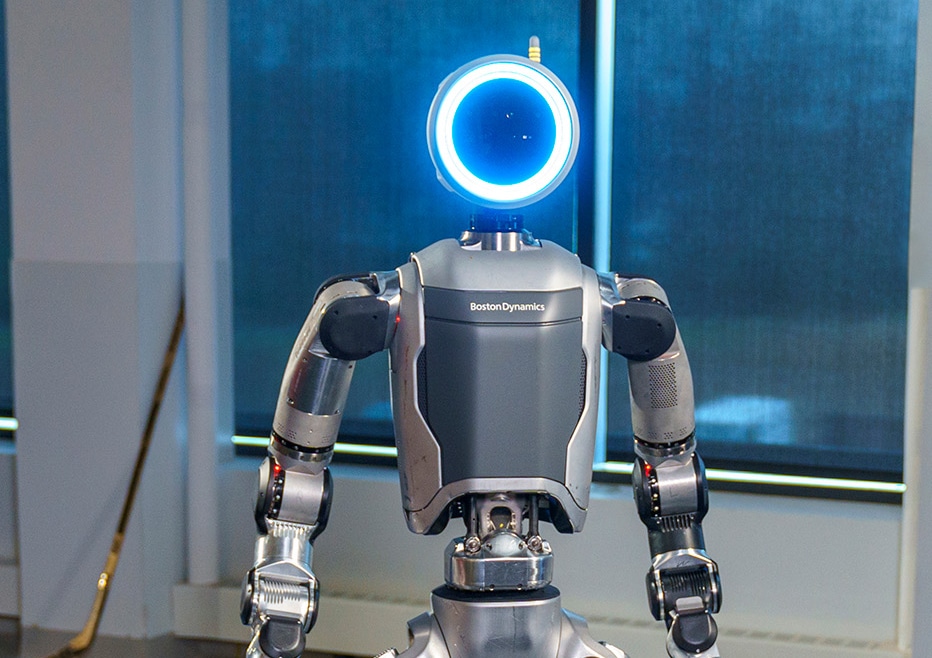
Whole-body control is therefore relevant beyond impressive motion. It shapes how the system balances competing physical requirements during an interruption. A buyer should ask what has been tested for the intended task and avoid assuming that successful movement in one configuration proves safe behavior in another. Boston Dynamics describes gripper development and full-body control as Atlas research priorities. Boston Dynamics on Atlas development.
Practice the human recovery
Human recovery should be rehearsed with the personnel who will actually perform it. They need clear indications of the robot's condition and a documented way to obtain help. The recovery process should not require informal interpretation of a posture or a guess about whether a controller might resume motion.
The practical objective is a predictable boundary between autonomous operation and human intervention. Evidence should cover ordinary stops, unexpected interruptions and the return to work. A humanoid that can pause in an understandable, manageable condition offers a more credible operating proposition than one evaluated only during uninterrupted performance.
The carried object also belongs in the safety analysis. A controlled body movement can still leave a fragile, hot or awkward load in an undesirable position. Stopping behavior should therefore be considered with the intended materials and tools, not only with an empty robot. This is one reason deployment evidence must remain tied to a defined task. A safety response suitable for an unloaded demonstration cannot automatically establish the acceptability of the same movement while the robot is holding a workpiece.
Sources & evidence
This archive preserves its original editorial date. Sources describe the events and announcements discussed; they do not establish today’s status.