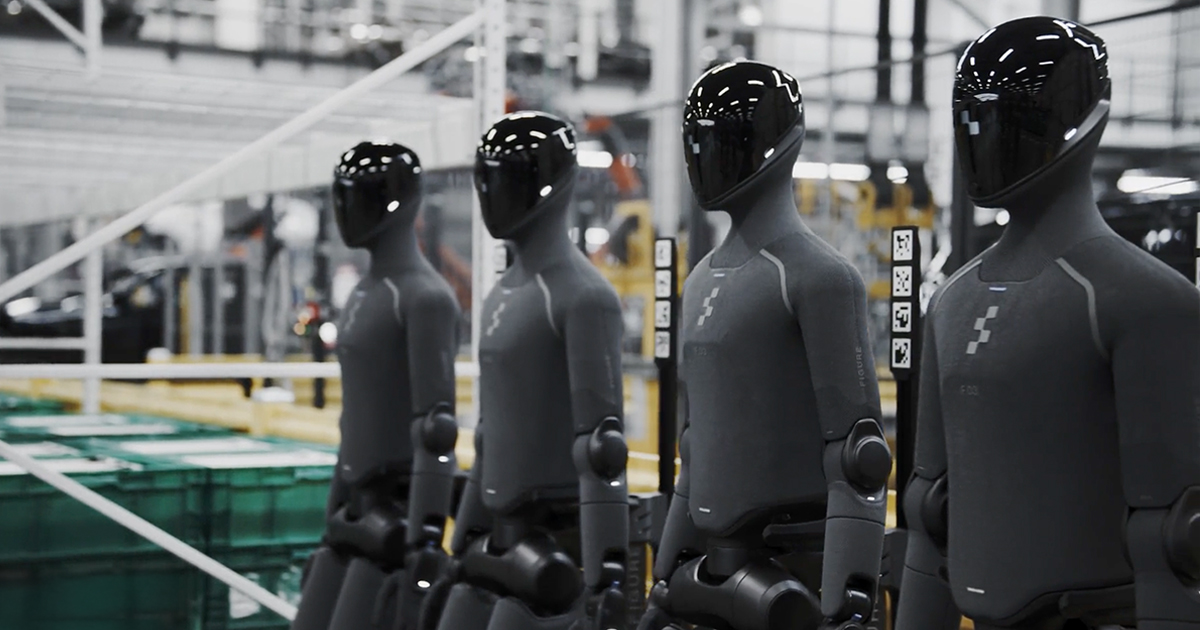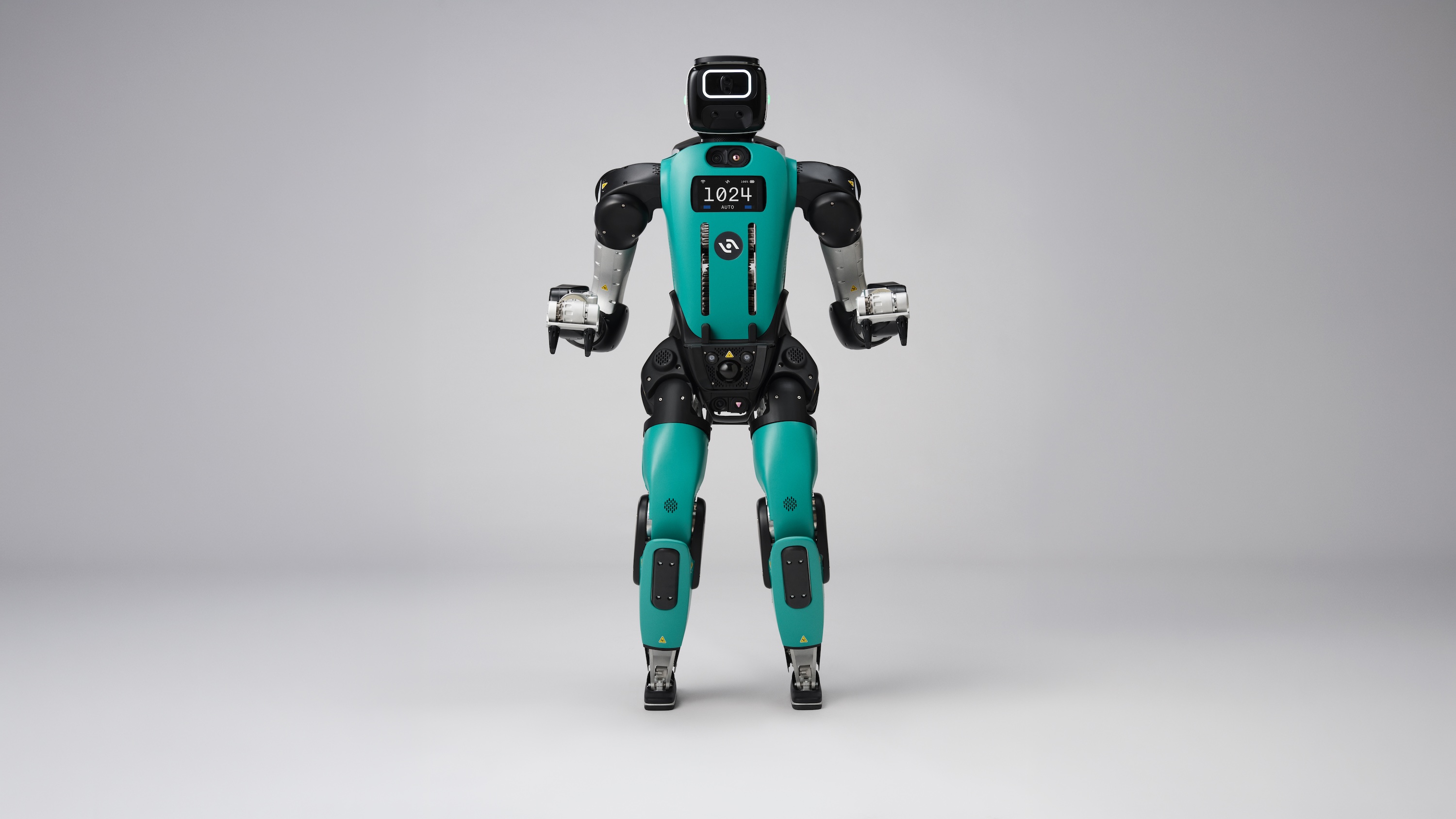
Agility identifies June 5, 2024 as Digit's first day of commercial work at a GXO facility near Atlanta, following a proof-of-concept effort in late 2023. The date and setting matter because they give the humanoid discussion a concrete operating example. The relevant question is not whether a humanoid can perform every human job. It is whether this robot can carry out a specified material-handling task reliably enough to fit the customer's operation. Digit's first commercial day at GXO; Agility's GXO deployment account.
From the 2023 pilot to a defined transfer job
The June 27, 2024 agreement identified the customer operation as a SPANX fulfillment facility. Digit would move totes from mobile robots to conveyors, using Agility Arc to coordinate the workflow. The arrangement followed the late-2023 pilot and used a Robots-as-a-Service model. Those details locate the commercial proposition: a humanoid filling a handling gap between existing machines. GXO and Agility commercial agreement.
The tote is the useful unit of analysis. Its arrival, pickup and delivery connect a mobile transport system to a conveyor, so the robot must meet two interfaces rather than merely demonstrate a grasp. This is a relatively legible starting point for commercial autonomy: the operator can identify the object, its expected destination and the point at which another system takes responsibility. It also gives failures a location. A delayed mobile robot, an unsuccessful pickup and a blocked conveyor are different problems even if all three appear as fewer completed transfers.
The surrounding system does some of the work
Material handling is usually a chain. Items arrive in a particular state, a robot transfers them and another process receives them. If the incoming presentation is unreliable, the robot may appear unreliable even when its grasping system works correctly. If the receiver is blocked, the robot may be ready but unable to contribute. A useful operational report distinguishes those causes because they imply different remedies. Improving the hand will not solve a scheduling bottleneck, and adding another robot will not necessarily improve a blocked downstream process.
Agility describes Arc as covering facility mapping, workflow definition, operational management and troubleshooting. That software role helps explain why the commercial package extends beyond the robot. A machine must know when a transfer is available and when its receiver can accept one; staff also need a way to investigate a stopped sequence. The announcement identifies the orchestration product, but does not supply a complete public record of interventions, availability or unit economics. The announced Arc integration.
What the comparison with a factory reveals
BMW's 2024 Figure 02 report described a different assignment: inserting sheet-metal parts into fixtures during a trial lasting several weeks. At publication, BMW said no Figure robots remained at Spartanburg and no definite return schedule had been set. That contemporary statement matters when comparing the two programmes: a completed trial and a commercial service agreement describe different operating relationships. BMW's August 2024 trial report.
The comparison also exposes the limits of ranking humanoids by appearance or a single movement. Fixture loading concentrates attention on accurate placement at a work cell. The GXO transfer connects material flow between machines. Both require manipulation, but the consequences of a missed cycle and the available recovery paths differ. A supplier can excel at one application while still needing substantial engineering for the other. Commercial progress is therefore better described through the task and its supporting system than through a universal label such as factory-ready.
Digit 5 belongs to the next chapter
Agility's September 2026 Digit 5 announcement draws on the preceding generation's commercial experience while proposing a broader range of tasks for the new robot. That distinction should be preserved. Operational history from Digit 4 is relevant development evidence; it is not direct proof that every promised Digit 5 workflow has already run at scale. The new model's early access is planned for 2027. Hardware improvements and a wider skill roadmap therefore belong to the next stage of the story, not a rewrite of what was deployed in 2024. Digit 5 announcement, September 15, 2026.
A newer body can inherit lessons without inheriting a validated operating record. Changes to sensing, hands, control software or charging can alter the original transfer even when the customer requests the same outcome. For GXO, a meaningful generational comparison would hold the tote flow and destination constant, then show what changed in completed work and support effort. If a wider object range is introduced at the same time, that is an expanded application as well as a hardware upgrade.
The commercial question is the support burden
This also affects labor claims. Staff may spend less time on repetitive lifting while taking on setup, replenishment, exception resolution and maintenance. Those changes can be beneficial, but they should be measured rather than described simply as replacing a person. The commercial unit is completed work with an acceptable total support burden. The human shape may help the robot fit an existing environment; it does not eliminate the need to integrate the workflow around it.
Comparisons over time should preserve the task definition. A faster transfer cycle achieved by narrowing the object range is a different improvement from faster handling of the same range. A higher completion rate obtained with more staff preparation may still be valuable, but the support change should be visible. This makes longitudinal reporting harder than publishing one milestone count. It also makes it much more useful, because the customer can identify which part of the system actually improved.
GXO's example establishes a concrete place to examine the humanoid business case: a repeatable transfer under a continuing customer relationship. The public accounts identify the task and the parties, while leaving important operating measurements undisclosed. Future reports will be most useful when they connect task volume to charging, interruptions and human assistance. That would show whether the service becomes easier to run as experience accumulates, and whether expansion is supported by evidence from the original job rather than by the ambitions of the next robot.
Sources & evidence
This archive preserves its original editorial date. Sources describe the events and announcements discussed; they do not establish today’s status.