Embodied AI’s AIR is a meaningful attempt to connect factory deployment with the process of teaching a robot. The company starts with a human operator and learns from the work performed. That makes the transition to useful autonomy the central commercial test, alongside the hardware itself.
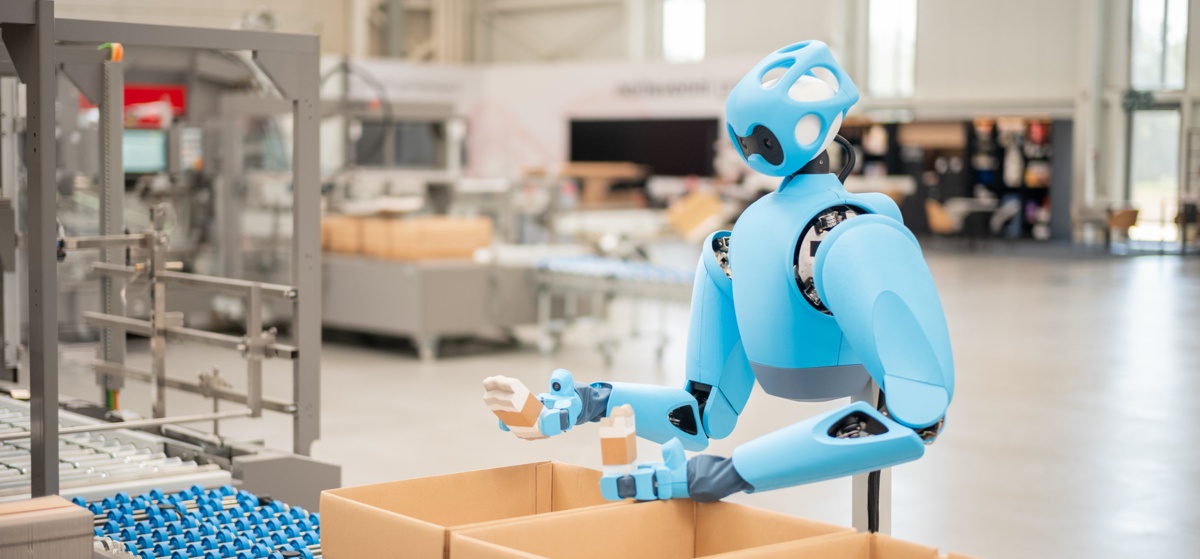
The Swiss company unveiled AIR on November 6. Its release describes a wheeled humanoid with tendon-driven arms and heavy components concentrated in the torso. The design aims to make the moving arms light and compliant. The company says AIR begins a task under human control, records those demonstrations and learns the task while an operator remains available for unfamiliar situations.
That workflow recognizes a practical constraint. A customer needs work completed while the robot is learning. A human fallback can preserve continuity, but it also creates a recurring labor requirement. The operator-to-robot ratio and the frequency of intervention will determine whether improvements in autonomy translate into an economic advantage.
The strongest argument for the hardware is that compliance can reduce the consequences of accidental contact and make shared work easier to engineer. The strongest objection is that a compliant arm alone cannot settle the safety of the whole application. Tools, carried objects, mobile motion and the surrounding process still require assessment. The release says CE marking is planned for 2027.
The company also reports a successful cable-handling test using its separate two-arm industrial cell. That is evidence offered for the underlying technology. An AIR buyer still needs performance information for the actual robot, task and operating conditions being purchased. Results from a different cell should remain tied to that cell.
In the next deployment cycle, the most useful measurements are completed work, intervention time and recovery from common exceptions. The manufacturer’s studio video shows the platform and its mechanisms. It establishes what is being presented, while the operational test remains a customer workflow over time.
AIR’s longer-term opportunity is a learning process that makes the next installation easier and reduces supervision without weakening reliability. That is a credible direction, conditional on the operating evidence. The next milestone is a customer result that shows how much human help remains after the initial teaching period.
Sources & evidence
Sources describe the announcements and evidence available when this analysis was published. Company claims are attributed; plans and trials are not treated as sustained operation.